January 2026

Popular Temples

Siddhi Vinayak Temple

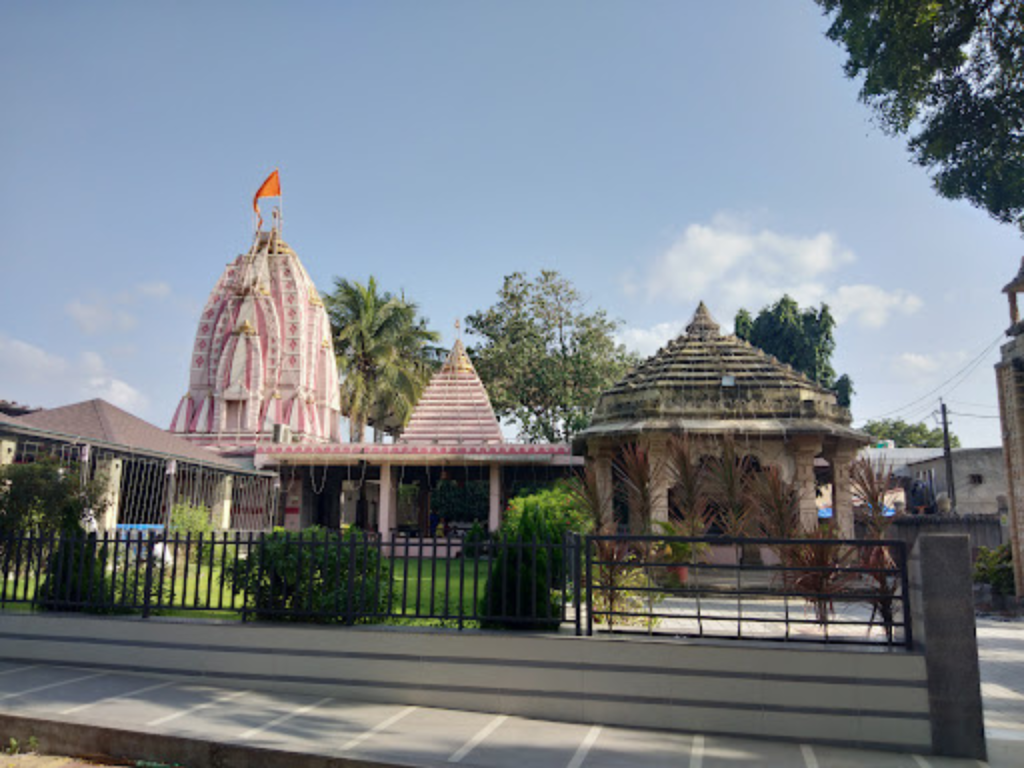
Bharuch, Gujarat yeethil Siddhi Vinayak Temple (Siddhivinayak Mandir) he ek prachin ani shraddheche sthan aahe. He mandir Bharuch madhil Maktampur bhagat sthit aahe. Hya mandirabaddalchi savistar mahiti khali dilipramane aahe: Mandirachi Vaisishty (Key Features): Darshanachya Vela (Timings): Pahanyasarkhi Itar Thikane (Nearby Attractions): Jar tumhi hya mandirala bhet det asal, tar javalach asleli hi thikane dekhil pahu shakta: Patta (Address): Siddhi Vinayak Temple P259+GQ6, Maktampur, Bharuch, Gujarat 392012. Google Maps Var Paha Tumhi hya mandirala bhet deun Bhagwan Ganeshache darshan gheu shakta, vishesh karun Mangalvari bhet dene adhik shubh manale jate.

Popular Temples

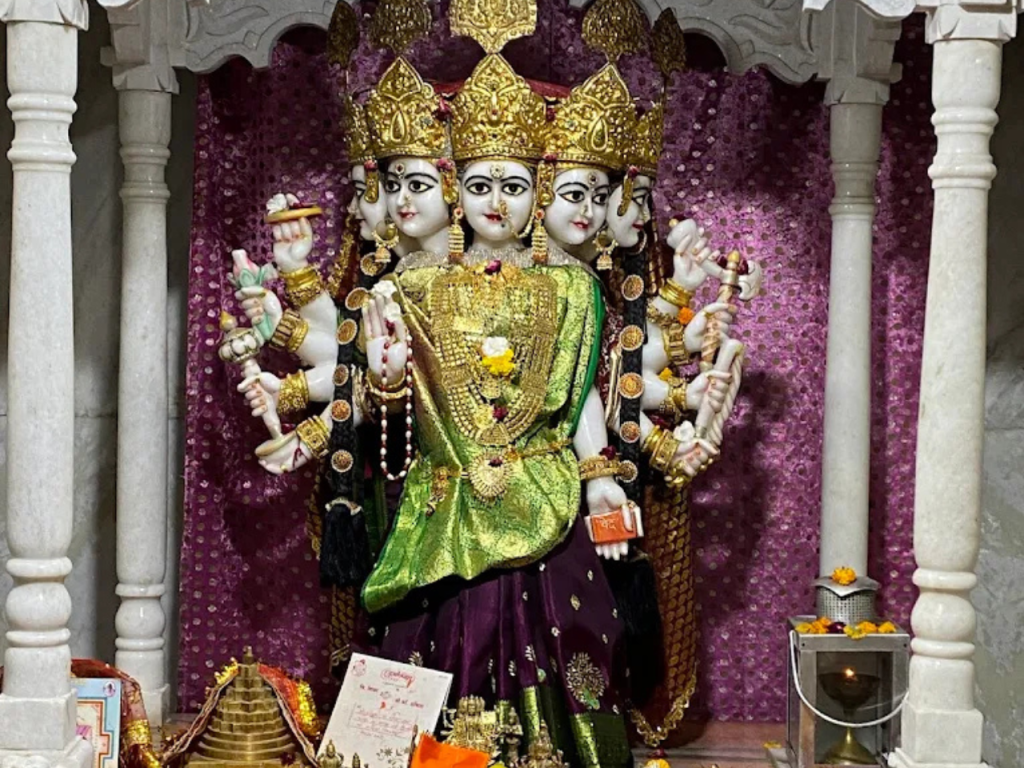
Shree Vishwa Gayatri AlakhDham Mandir

Shree Vishwa Gayatri AlakhDham Mandir is a prominent spiritual landmark dedicated to Goddess Gayatri, located on the serene banks of the sacred Narmada River in Bharuch, Gujarat. It is widely recognized for its peaceful atmosphere and its unique architectural blend of modern and traditional styles. Key Details at a Glance Feature Details Location Zadeshwar, Bharuch, Gujarat (near the Narmada River/Golden Bridge) Primary Deity Goddess Gayatri (Mother of the Vedas) Founder Shri Shri Shri 1008 Swami Alakh Giriji Maharaj Architecture Elaborate marble structure with intricate carvings and colorful mythological murals Visiting Hours Generally 7:00 AM to 7:00 PM (open daily) Special Features Sapt Rishi idols, Narmada River views, and meditation halls Spiritual Significance The temple is dedicated to Goddess Gayatri, who symbolizes divine knowledge and is considered the embodiment of the Vedas. The mission of the temple (Vishwa Gayatri Mission) is to promote spiritual awakening, Vedic knowledge, and world peace. Architecture & Atmosphere Events and Activities How to Reach

Popular Temples

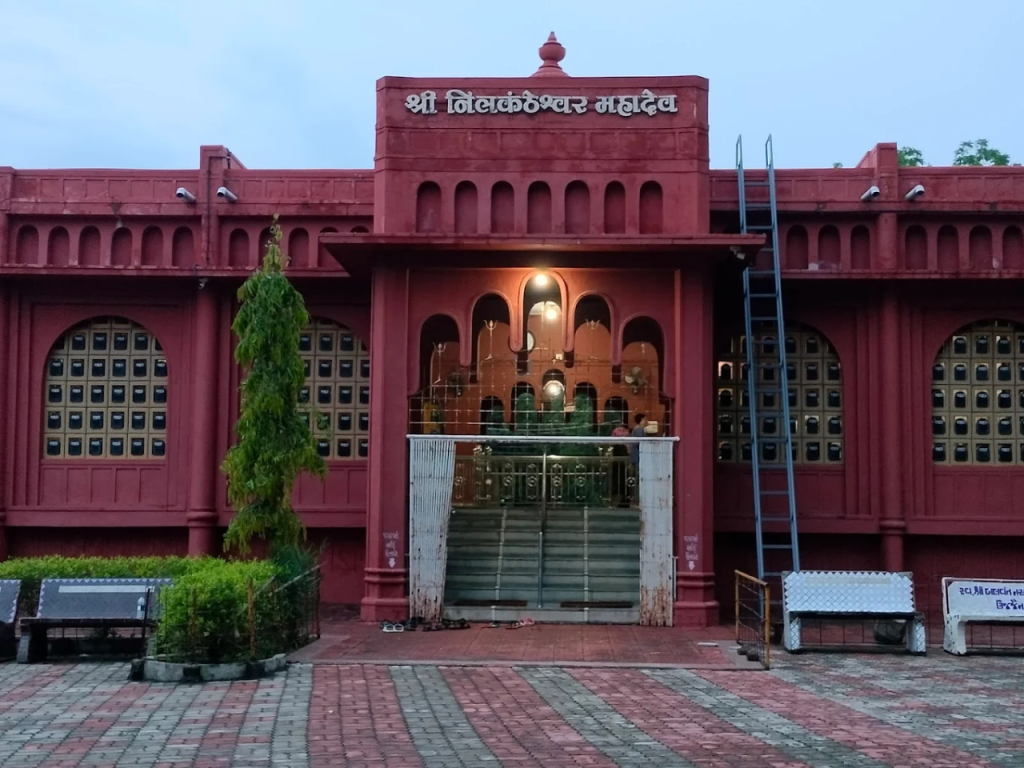
Shree Nilkantheshwar Mahadev Mandir

Shree Nilkantheshwar Mahadev across India. The name “Nilkantheshwar” (or Neelkanth) refers to Lord Shiva as the “Blue-Throated One,” a title he received after consuming the Halahala poison during the churning of the ocean (Samudra Manthan) to save the universe. Depending on which specific location you are interested in, here is the information for the most prominent ones: 1. Nilkantheshwar Mahadev Mandir, Bharuch (Gujarat) Located on the banks of the sacred Narmada River, this is one of the most visited temples in the region. 2. Neelkanth Mahadev Temple, Rishikesh (Uttarakhand) Situated at an altitude of 1,330 meters in the Pauri Garhwal district, this is perhaps the most famous “Neelkanth” temple globally. 3. Nilkantheshwar Temple, Pune (Maharashtra) Located on a hillock near the Panshet and Khadakwasla dams (approx. 40 km from Pune). 4. Nilkantheshwar Temple, Udaipur (Madhya Pradesh) Located in Vidisha district, this is a Monument of National Importance protected by the Archaeological Survey of India (ASI). Core Legend (The Full Story) The name Nilkantheshwar comes from the following Sanskrit verse/story: During the Samudra Manthan (Churning of the Ocean) by the Gods and Demons, a lethal poison called Halahala emerged. It was so potent it threatened to destroy all of creation. To protect the world, Lord Shiva drank the poison. However, Goddess Parvati placed her hand on his throat to stop the poison from descending further into his body. The poison stayed in his neck, turning it blue—hence the name Nilkanth (Nil = Blue, Kanth = Throat).

Popular Temples

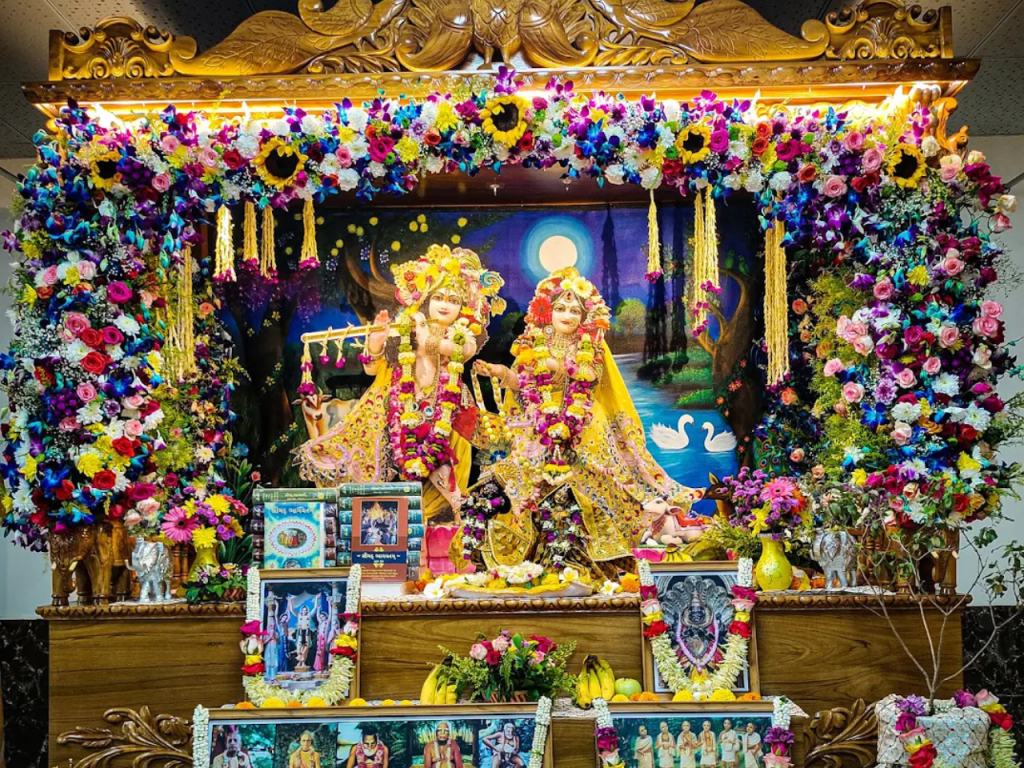
ISKCON Temple Bharuch (Sri Sri Radha Madanmohan Mandir)

The ISKCON Temple Bharuch, also known as the Sri Sri Radha Madanmohan Mandir, is a significant spiritual and cultural landmark located in the holy region of Mulad, Gujarat. It serves as a hub for the Hare Krishna movement in the Bharuch-Ankleshwar region. 🏛️ Temple Overview & History The temple is part of a large-scale project developed under the guidance of H.H. Bhakti Vikasa Swami Maharaj. It is situated on a 6-acre campus that includes not just the main shrine, but also educational and community facilities. 🕉️ Deities & Worship The presiding deities of the temple are Sri Sri Radha Madanmohan. 🕙 Daily Schedule (Timings) The temple follows a standard ISKCON schedule, though specific timings may vary slightly during festivals: Event Time Mangala Aarti 4:30 AM Tulasi Aarti 5:00 AM Japa Meditation 5:15 AM – 7:15 AM Sringar Darshan 7:30 AM Srimad Bhagavatam Class 8:00 AM Raja Bhoga Aarti 12:30 PM Temple Reopens 4:30 PM Gaura Aarti (Sandhya) 7:00 PM Sayana Aarti 8:30 PM 🌟 Key Features 📍 Address & Contact

Popular Temples

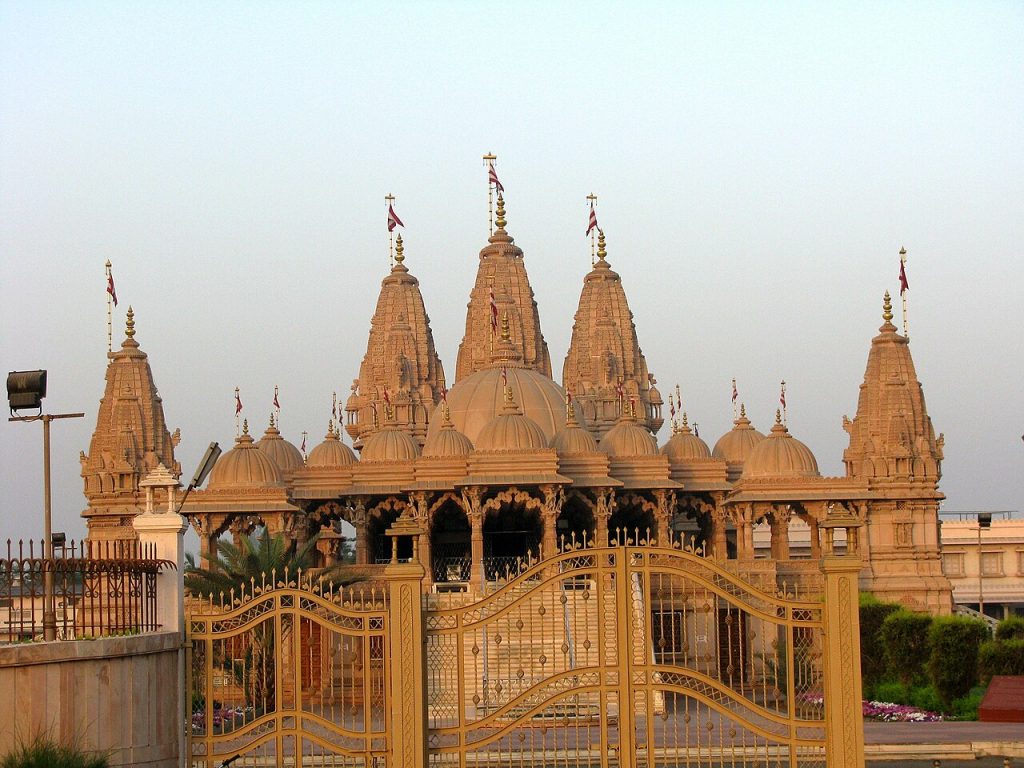
BAPS Shri Swaminarayan Mandir Bharuch

The BAPS Shri Swaminarayan Mandir in Bharuch is a magnificent spiritual and architectural landmark situated on the banks of the Narmada River. It is a shikharbaddh (pinnacled) temple that serves as a hub for devotion, culture, and humanitarian activities. 1. Key Details & Architecture The temple is renowned for its stunning craftsmanship and peaceful environment. 2. Deities (Murtis) The sanctum sanctorum houses several beautiful murtis (sacred idols): 3. Daily Schedule & Timings The temple follows a strict schedule for darshan (viewing) and Aarti (worship rituals). Event Time Mangla Aarti 6:00 AM Shangar Aarti 7:30 AM Rajbhog Aarti 11:15 AM Sandhya Aarti 7:00 PM Shayan Aarti 8:15 PM Note on Darshan Breaks: The temple is generally closed for Darshan during Thal (offering of food) between 12:00 PM to 4:00 PM and 6:00 PM to 7:00 PM. 4. Facilities & Visitor Information 5. Visitor Guidelines To maintain the sanctity of the mandir, visitors are requested to follow these rules:

Festivals of Bharuch

Traditional Gujarati Festivals Navratri

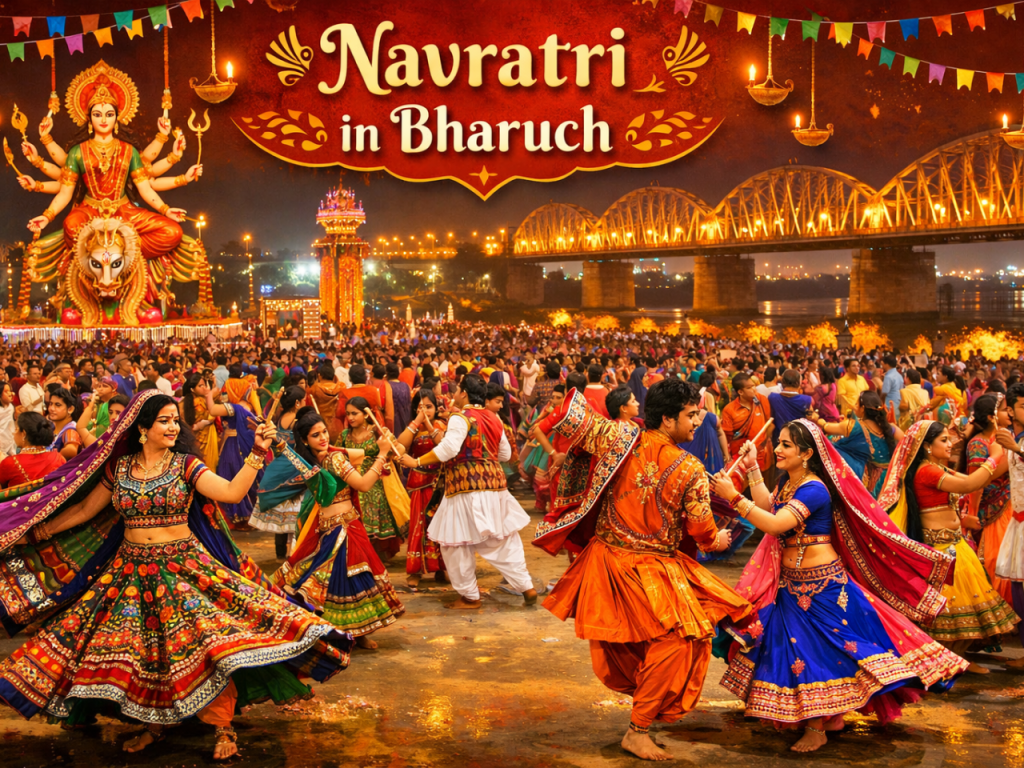
In Bharuch, Navratri is not just a festival but a deeply spiritual and communal experience. While many cities have moved toward massive “commercial” grounds, Bharuch is celebrated for preserving the “Sheri Garba” (street garba) culture and its unique connection to the Nav Nath temples. 1. The Sheri Garba Tradition “Sheri” means street or lane. In Old Bharuch, the festival happens right in the heart of residential neighborhoods. 2. The Nav Nath Temples (The Nine Guardians) A unique aspect of Bharuch’s Navratri is the presence of the Nav Nathas—nine ancient, self-manifested (Swayambhu) Shiva temples that surround and protect the old city. 3. Navratri at the Nav Nath Temples During the nine nights of Navratri, these temples become the focal point of devotion: 4. Comparison: Commercial vs. Traditional Feature Commercial Garba (Party Plots) Bharuch Sheri Garba Music Bollywood fusion, loud DJs Folk songs, Dhol, Shehnai Vibe Concert-like, performance-heavy Devotional, community-focused Dress High-fashion Chaniya Choli Traditional and simple Timing Ends by midnight (usually) Often goes late into the night In Bharuch, Navratri is not just a festival but a deeply spiritual and communal experience. While many cities have moved toward massive “commercial” grounds, Bharuch is celebrated for preserving the “Sheri Garba” (street garba) culture and its unique connection to the Nav Nath temples. 1. The Sheri Garba Tradition “Sheri” means street or lane. In Old Bharuch, the festival happens right in the heart of residential neighborhoods. 2. The Nav Nath Temples (The Nine Guardians) A unique aspect of Bharuch’s Navratri is the presence of the Nav Nathas—nine ancient, self-manifested (Swayambhu) Shiva temples that surround and protect the old city. 3. Navratri at the Nav Nath Temples During the nine nights of Navratri, these temples become the focal point of devotion: 4. Comparison: Commercial vs. Traditional Feature Commercial Garba (Party Plots) Bharuch Sheri Garba Music Bollywood fusion, loud DJs Folk songs, Dhol, Shehnai Vibe Concert-like, performance-heavy Devotional, community-focused Dress High-fashion Chaniya Choli Traditional and simple Timing Ends by midnight (usually) Often goes late into the night In Bharuch, Navratri is not just a festival but a deeply spiritual and communal experience. While many cities have moved toward massive “commercial” grounds, Bharuch is celebrated for preserving the “Sheri Garba” (street garba) culture and its unique connection to the Nav Nath temples. 1. The Sheri Garba Tradition “Sheri” means street or lane. In Old Bharuch, the festival happens right in the heart of residential neighborhoods. 2. The Nav Nath Temples (The Nine Guardians) A unique aspect of Bharuch’s Navratri is the presence of the Nav Nathas—nine ancient, self-manifested (Swayambhu) Shiva temples that surround and protect the old city. 3. Navratri at the Nav Nath Temples During the nine nights of Navratri, these temples become the focal point of devotion: 4. Comparison: Commercial vs. Traditional Feature Commercial Garba (Party Plots) Bharuch Sheri Garba Music Bollywood fusion, loud DJs Folk songs, Dhol, Shehnai Vibe Concert-like, performance-heavy Devotional, community-focused Dress High-fashion Chaniya Choli Traditional and simple Timing Ends by midnight (usually) Often goes late into the night

Festivals of Bharuch

Chandi Padvo

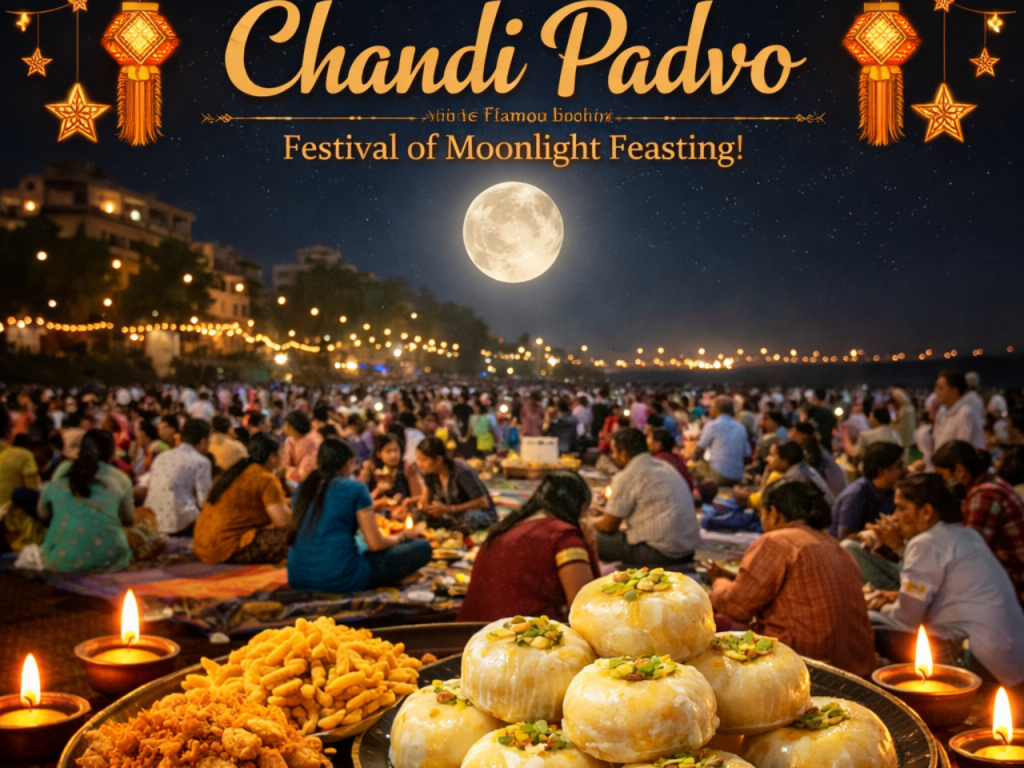
Chandi Padvo (also known as Chandani Padva) is a uniquely South Gujarati festival that captures the spirit of community and the love for food. While it originated in Surat, it is celebrated with equal fervor in Bharuch, marking a night of moonlit gatherings and traditional delicacies. 1. Timing and Context 2. The Tradition: Moonlight & Rooftops The essence of Chandi Padvo is outdoor dining. 3. The Iconic Menu: Ghari & Bhusu The festival is famous for a specific “Jugalbandi” (pairing) of food that is consumed in massive quantities: 4. Historical Legend: Tatya Tope There is a fascinating historical story linked to this festival. During the 1857 War of Independence, the famous freedom fighter Tatya Tope reportedly sought refuge in South Gujarat. To provide him and his soldiers with high-energy food that wouldn’t spoil easily, local confectioners created the Ghari. The tradition of eating it on this day is said to commemorate the strength and spirit of those fighters. Chandi Padvo 2026 Date In 2026, Sharad Purnima falls on October 25th, which means Chandi Padvo will be celebrated on October 26th, 2026.

Festivals of Bharuch

Bhadbhut Mela (The Mini Kumbh)

The Bhadbhut Mela, famously known as the “Mini Kumbh of South Gujarat,” is a massive religious fair held in the village of Bhadbhut, about 20 km from Bharuch on the banks of the Narmada River. 1. The 18-Year Cycle The most unique feature of this mela is its rarity. It is held only once every 18 years. The timing is determined by the Hindu lunar calendar, occurring specifically during the Adhik Bhadarva Maas (the extra leap month of Bhadrapada). 2. Religious Significance & Legend 3. Scale and Celebration 4. Cultural & Modern Context

Festivals of Bharuch

Meghraja Festival & Chhadi Utsav (Unique to Bharuch)

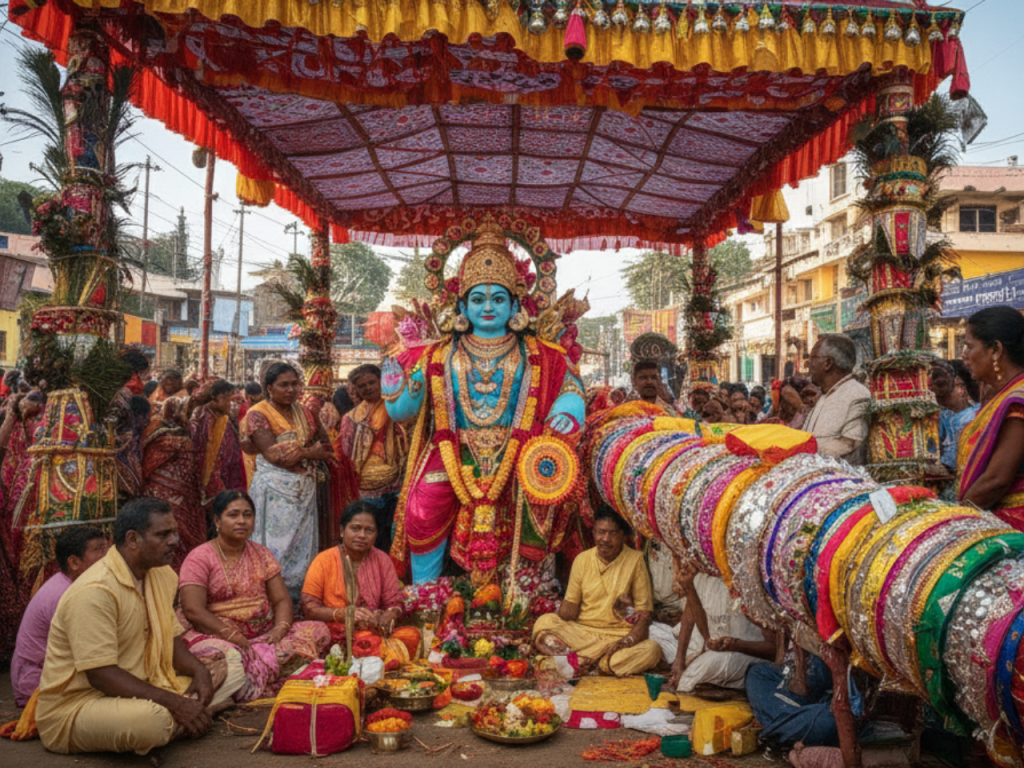
The Meghraja Festival and Chhadi Utsav represent a unique cultural heritage of Bharuch, blending communal harmony with ancient folklore. This celebration is found nowhere else in India. 1. Historical Origins and Legend This festival has been celebrated for over 250 years. It originated during a period of devastating drought in the region. Local communities, primarily the Bhoi, Kharwa, and Valmiki, came together to pray for rain by creating an idol of Meghraja (Lord Indra, the King of Clouds and Rain). According to legend, their devotion brought immediate rainfall, and the tradition has been upheld ever since as a gesture of gratitude. 2. The Idol of Meghraja 3. Chhadi Utsav (The Stick Festival) The climax of the festivities occurs during the final days, specifically around Shravan Vad Nom. 4. The Grand Finale (Visarjan) The festival concludes with a massive procession through the streets of Old Bharuch.

Listings
News
Home
Jobs
Contact